Wednesday, October 11, 2006

What if the Amish were in charge of the War on Terror?

Finally, after months of reading all kinds of (Christian) blogs, one which actually promotes some real Christian ideas in the real world. Diana Butler Bass wrote this one. I know it sounds unrealistic, and that there is something of an apples/oranges relationship between the Amish and Al Qaeda, but this is an attempt to think truly Biblically and in a Christian wat about international matters.

I'll tell you, I think the Bush administration has gotten us into so much trouble in Iraq, Iran, Afghanistan, North Korea - we are in deep doodoo and I don't see much of a real Christian perspective anywhere around. Try this on for size - Biblical size:

I confess: Over the last 10 days, I did not pay much attention to the Amish school shooting. As the mother of an 8-year old girl, I find school violence stories too painful to follow.

Despite attempts to avoid this particular news, the stories of the Amish practice of forgiveness eventually captivated me. Their practice of forgiveness unfolded in four public acts over the course of a week. First, some elders visited Marie Roberts, the wife of the murderer, to offer forgiveness. Then, the families of the slain girls invited the widow to their own children’s funerals. Next, they requested that all relief monies intended for Amish families be shared with Roberts and her children. And, finally, in an astonishing act of reconciliation, more than 30 members of the Amish community attended the funeral of the killer.

As my husband and I talked about the spiritual power of these actions, I commented in an offhanded way, “It is an amazing witness to the peace tradition.” He looked at me and said passionately, “Witness? I don’t think so. This went well past witnessing. They weren’t witnessing to anything. They were actively making peace.”

He was right. Their actions not only witness that the Christian God is a God of forgiveness, but they actively created the conditions in which forgiveness could happen. In the most straightforward way, they embarked on imitating Christ: “Father, forgive them; they know not what they do.” In acting as Christ, they did not speculate on forgiveness. They forgave. And forgiveness is, as Christianity teaches, the prerequisite to peace. We forgive because God forgave us; in forgiving, we participate in God’s dream of reconciliation and shalom.

Then an odd thought occurred to me: What if the Amish were in charge of the war on terror? What if, on the evening of Sept. 12, 2001, we had gone to Osama bin Laden’s house (metaphorically, of course, since we didn’t know where he lived!) and offered him forgiveness? What if we had invited the families of the hijackers to the funerals of the victims of 9/11? What if a portion of The September 11th Fund had been dedicated to relieving poverty in a Muslim country? What if we dignified the burial of their dead by our respectful grief?

What if, instead of seeking vengeance, we had stood together in human pain, looking honestly at the shared sin and sadness we suffered? What if we had tried to make peace?

So, here’s my modest proposal. We’re five years too late for an Amish response to 9/11. But maybe we should ask them to take over the Department of Homeland Security. After all, actively practicing forgiveness and making peace are the only real alternatives to perpetual fear and a multi-generational global religious war.

I can’t imagine any other path to true security. And nobody else can figure out what to do to end this insane war. Why not try the Christian practice of forgiveness? If it worked in Lancaster, maybe it will work in Baghdad, too.

Tuesday, October 10, 2006

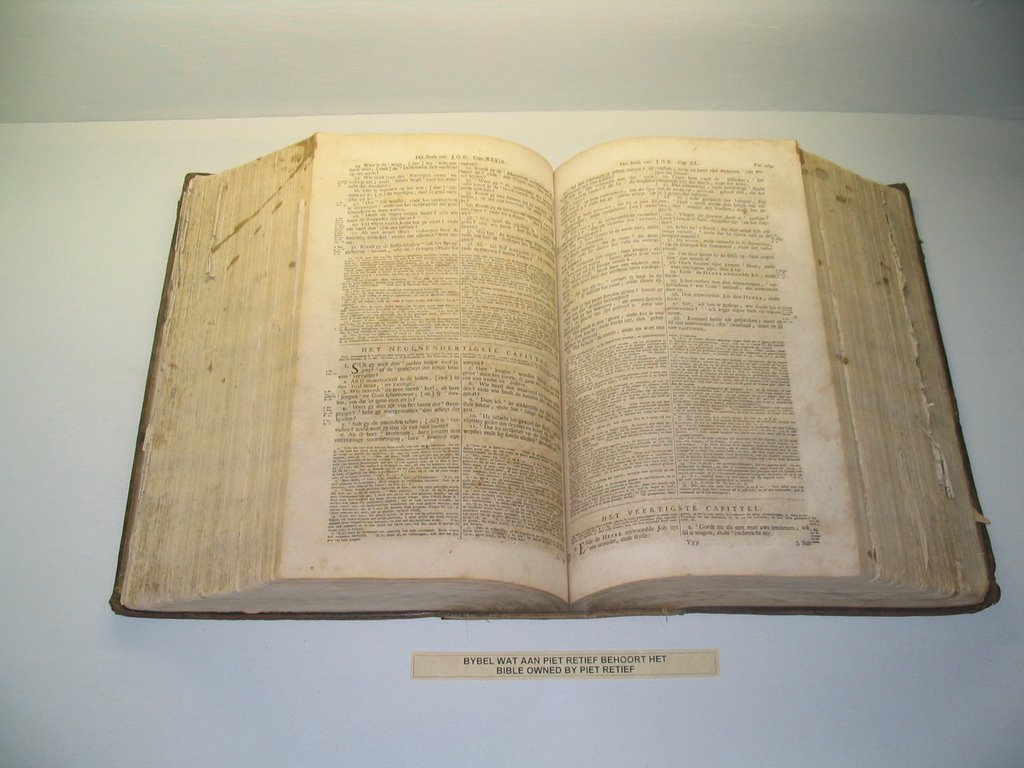
Voortrekker Monument

Last Friday we visited the Voortrekker Monument in Pretoria, built to honor the Afrikaanse pioneers who left the coastal areas and British subjection to forge their way into the frontiers of South Africa.

These migrations were partly theologically motivated. The Pioneers, Dutch Reformed Calvinists, read the Old Testament and saw their story in the story of Israel and her journey to the Promised Land. They believed they too were God's people, with rights to their own Promised Land. In the museum of the Monument you can find their Bibles and books of sermons, which were read in Sunday services when a minister could not be present.

The Battle of Blood River is steeped in theology, prayer en religious observance. Read about it here.

The day of this battle will never be forgotten. On December 16 every year, at noon, the sun shines through a tiny hole in the dome of the monument and lights op an inscription on a crypt placed far below on the lower level. The inscription reads: We for Thee, South Africa. The day used to be called The Day of the Vow, but since 1994, the first free elections in South Africa, the day is called The Day of Reconciliation.

I wonder if it is possible that we today read the Bible and find in it the justification for things we want to believe.

Why should we be any different than the Pioneers?

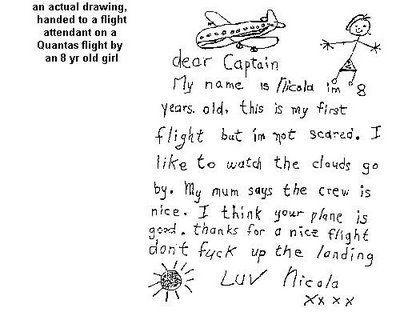
Flight

After all these years of flying I still am amazed at how these planes can cover such enormous distances exactly on time. I enjoyed our flight from Johannesburg tremendously. At around 7 AM the sun came up and we had wonderful views of the Sahara of North Africa, the Mediterranean, South Europe and the Alps.

I ran across this little note yesterday. It struck my funny bone. Warning: If you don't want to read the f** word, don't read the note.


Monday, October 09, 2006

Strangers

Yesterday morning we arrived home from our vacation in South Africa. It was a wonderful vacation. We enjoyed being back in Africa. And it was really Africa - but Africa with an infrastructure.

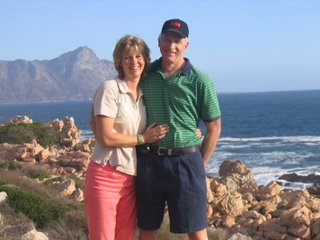
High point was our contact with my sister and her husband. We have never really as adults spent much time together, but because we both have lived for a long time in “foreign” countries working for Christian organisations we have much in common. We were able to share our lives with and encourage each other.

I was reminded again of the fact that we live our lives very clearly now as “strangers” and “foreigners”. We have lived so differently from our family and the friends we grew up with that we have become strangers to them. They will never understand us completely. We will never be completely at home anywhere again – not where we came from, and not where we live now.

A friend of mine reminds me often that that is a painful spot for me. And he is right. I notice that, the longer I live here in Holland, the more pain I experience as I experience what it means to be a stranger.

But there is something very positive I can do with that feeling. I can recognize it as something that has been given to me. It is part of me and who I am.

If it is true that “power is made perfect in weakness” (2 Cor. 12:9) then this being a stranger with the pain it carries with it can be a source of strength for me – a strength that would not be there without it.

If I were to lose that pain, I would lose that strength. So I cling to the pain, not because it is fun, but because it has a goal – a country of our own. (Heb. 11:14).

We were privileged to be able to share that with family.

I will draw strength from that in the coming weeks.

It is very practical.

Wednesday, October 04, 2006

Assumptions

Recently I had a chat with someone who had been raised in an evangelical Christian environment and had been an active Christian until recently. A number of factors caused him to give Christianity up for atheism. The “conversion” was not a sudden one – it took place over a number of years. He was very honest to admit that it was harder to be an atheist than a Christian, mostly because it meant that he was totally alone in the world/universe to solve every problem and make every decision.

Two other things about the conversation struck me and confirmed (again) things I have been thinking for years.

The person told me that since he had become an atheist, all of his Christian friends except two had broken off their friendship with him. The reason was that their basic assumptions and beliefs about the world were not the same any more, so how could they remain friends?

There is a tendency on the part of Christians to build friendships with a purpose. That purpose is usually either evangelism or discipleship. If neither of those things can happen any more, the friendship really has no reason for existence.

Over the years I have found this a difficult part of Christianity to live with, and in fact, I have chosen to change my assumptions about life and Christianity so that I do not have to live with this tension any more. A fruit of that is that I enjoy real friendships with “non-Christians” in which we can share any aspect of our lives with each other, and have a meaningful impact on each other's lives.

When I suggest to Christians that most Christian friendships have an ulterior (manipulative, if you want to be negative) motive, it is strongly denied. This conversation confirmed my observation. And it really shouldn’t be that way, I don’t think.

The second thing had to do with motivation for evangelism. I am convinced that, when everything else is stripped away, the fear of hell is the fundamental motivation for Christian evangelism. You don’t have to read many conservative Christian weblogs to have that observation confirmed. See this link from Desiring God, for example.

Lately I’ve listened to some stuff put out by the Way of the Master Radio broadcasts. Hell is big with them. They have substituted the word hell with a much more precise theological term: a real bad place. But the meaning remains the same.

Again, most Christians deny this when you put it to them this way. But I don’t really believe them.

After we had talked about hell a little bit, and I tried to put it into another perspective, my conversation partner asked the classic question: “If hell isn’t the motivation, why do you evangelize then?”

See what I mean?

If you are a Christian, and one who wants to evangelize, I would encourage you to be honest about why you do it. If fear of hell is your motivation when all other things are stripped away, at least be man or woman enough to admit it. (And please don't misunderstand me - I'm not saying that this fear is the only motive. There are other very positive motivations also.)

And if you find that to be your primary motivation, perhaps you should ask yourself if that really is the biblical motivation for evangelism, or if there is not some way to change the paradigm so something besides fear drives you.

Tuesday, October 03, 2006

Birthday

Today I have turned 53. (Yes – all you faithful readers may feel free to congratulate me!)

This morning I thought about what I wrote at the beginning of “My Story” on my website:

My mother is very proud of me. She thinks I have the Midas touch.That is, I suspect, an attempt on her part to neutralize just about the first words spoken about me.I was just born. My parents stood in front of the window of the baby nursery, admiring their son (in those days – 1953 – newborn babies were placed alone in the baby nursery) . The grandparents of another baby stood at the same window.Admittedly, I was not big. But apparently there was something else about me other than my size that prompted one of the other grandparents to say – without considering who might be standing next to them – “isn’t that pathetic!”.I heard nothing of this. My parents were stunned at these words but my mother’s pride in me could not be shaken.

Fifty-three years later the end of that story still applies to me:

Should my mother be proud of me? I think it would only be honest to say “yes” in answer to that question. I am involved in profitable ways with people and both Cyndi and I are professionally and privately contributing to our society. We are still married and our children are healthy and well. Our life is stable, but not at all boring. Every day is different and we have the opportunity to travel and pursue our hobbies.

I am so thankful for Cyndi, my wife of more than 32 years, and all our children: Sarah and Aaron, Ben and Ramona, Will and Mariana. Not to mention our grandson Jeremiah. (There are hundreds if not thousands of other people I could mention also. I'm thankful for you too!)

The foundation for my life has been and continues to be God’s grace. Psalm 27 is my favorite Psalm and Bible passage.

The LORD is my light and my salvation— whom shall I fear?
The LORD is the stronghold of my life— of whom shall I be afraid?

I am still learning not to be afraid, and to swim in the endless sea of God’s grace. It is wonderful!

And through the difficulties of life – that I also experience – this verse keeps me on course:

I am still confident of this:
I will see the goodness of the LORD
in the land of the living.

I wish you all a very blessed day!
Don’t be afraid, and expect good things!


Monday, October 02, 2006

Memories

Yesterday we arrived safely back in Johannesburg after driving 4000 kilometers (2400 miles) in 10 days.

We chose another route for the return trip from Cape Town, a route that took us through the Little Karoo and the Great Karoo. An absolutely wonderful landscape it was - we enjoyed the birds, flowers and animals. We saw baboons, a monitor lizard, a kudu and a hoopoe bird.

Africa can change so quickly. At 11 AM on Saturday the temperature outside was 64 degrees. By 3 PM it was over 100 degrees.

Saturday night we slept in a B&B called Eenzaamheid, in the bush 12 miles from the road. We were warmly welcomed by the lady of the house, who had lived there for nine years with her husband and two children, aged 4 and 2. She cooked us a wonderful meal, which we enjoyed thoroughly.

Her husband is the fifth generation to live and run that land. Their name is Theron, and as we drove away we saw a tiny graveyard with the name Theron on all the gravestones.


It all reminded Cyndi and I very much of our first years in Nigeria. And the memories and stories began to flow, much faster than they ever do in Holland.

Thursday, September 28, 2006

Cape Town and Table Mountain

We are enjoying our time around Cape Town immensely.

Yesterday we climbed Table Mountain via the Platteklip Gorge.

It is a strenuous hike, as you can see from this website. We did it in 21/2 hours, which was pretty good, I guess.

It tok a lot out of me, but was a very beautiful trip.

For a lovely photo of the gorge, click here.

Monday, September 25, 2006

Community

Saw a wonderful live open air concert in Cape Town yesterday. The Moreira Project. The swing of black musicians with a mostly black audience brought tears to my eyes.

Before the band came on, a storyteller told a story. (Sermons should be that way). One thing he said struck me:

You are because I am.
I am because you are.

That is Africa, I thought. Community. I only exist because the other exists, and he/she can only live if/because I live.

We have lost that in our western society. People are "objects", "products". Means of exchange.

My partner is there to meet my needs.
The shopkeeper provides me a service.
I want to help my children grow up and be productive.
I support my friend and he/she me.
The politician tries to provide a peaceful and wealthy society.
The congregation pays its minister to deliver a reasonable sermon and be there in times of crisis.
The minister tries to keep his/her congregation on the straight and narrow and hopes to receive a word of encouragement in the process.

But the thought that I can only exist because the other is there? And he/she because I am there?

Paul said "do not be conformed to the thinking of this world".
It seems to be like we have conformed big time.

Try to look at other people differently today.

You cannot "be" without them. and they without you.

Wednesday, September 20, 2006

Apartheidmuseum

I was speechless.

A very well done museum - you can tell that by this sign.

There are no words for the type of evil committed during this period of South African history - which wasn't all that long ago.

There are no words for the type of heroism of those who gave everything for the cause they believed in.

Tuesday, September 19, 2006

Maher Arar

This is what I meant in my post "Can we trust him now"?

The story of Maher Arar.

Saturday, September 16, 2006

Vacation

Tomorrow my wife and I fly from Amsterdam to Johannesburg, South Africa.

A sister of mine lives there, and she works with her husband for Trans World Radio.

We're also going to the Cape to see the Southern White Whales and pay a visit to Cape Town and Table Mountain.

We're very excited to be able to go back to Africa again, and we're interested in the culture there and the influence of apartheid.

I won't be blogging so much for the next three weeks - vacation is, after all, vacation!

I will try to do some, but the frequency will be less.

Until the next time. Take care of yourselves.

Thursday, September 14, 2006

The surprise of washing feet

Jesus washed the feet of his disciples.

He was their Lord, Master and Creator, and he kneeled down before them and washed their dirty feet.

When he was done, he gave them a command: "Now that I, your Lord and Teacher, have washed your feet, you should also wash one another's feet."

His command contains a surprise. You would think that he would say, "I have served you, now I want you to serve me."

That's what is often preached in church. God has done X for you, now go and do Y for Him. (Even gratitude is placed in that light.)

But that is not what Jesus says.

I have done it for you - now go and do it for someone else. The movement is horizontal. Because Jesus has washed my feet, I go and look for someone else whose feet need washing.

It does, of course, come back to Jesus in the end. "Whatever you did for the least of these brothers of mine, you did it for me".

If you have lost contact with God, or don't know exactly what He wants you to do, maybe this will help.

Go look for a pair of dirty feet.

Wednesday, September 13, 2006

We're safe

Can't resist this one either.
Mostly the words of our President. Much more doesn't really need to be said.
Remember "does 'is' mean 'is' or doesn't it"?

Tuesday, September 12, 2006

Judge ye not one another

When I look back at our years of church planting in Amsterdam I am struck by a focus that lay close to the heart of our ministry: we felt we needed to know whether or not someone had crossed the line from death to life, from darkness to light.

The theology was that people are in darkness, heading for hell, sinking in the cold waters of death in the same way the victims of the Titanic were sinking so many years ago. It was a question of life and death to provide the way to escape from destruction, but also to know whether a person had made sufficient use of the means of salvation provided to him or her.

Someone would, on the street in Amsterdam, pray the “sinner’s prayer” and make a profession of faith. We would write home about that with great joy – someone had escaped from death into life!

But we were also realistic and we were trying to build a community of believers. So we would see that person be sporadic in church attendance, irregular in pursuing spiritual disciplines, and persistent in continuing a lifestyle that was not in accordance with Biblical norms.

The question would inevitably arise: Was the profession of faith credible? Had the person really passed from death to life?

And so we spent quite a bit of time trying to determine, for the community in general but also in specific instances, what the real indications were that someone had credibly crossed that line.

It was a perfectly logical and necessary thing to do, given our theology. It was a question of life and death.

But it made me uncomfortable:

Was not the motivation for our ministry primarily fear – fear of destruction and hell? And is that the Biblical motive for ministry?
How much of what we did was manipulative, based on fear? (And manipulation is perfectly legitimate when the situation is a matter of life and death. If I am rescuing someone from a burning building, then every possible means is valid.)
Did I really love the person as a person?
Was it right or good for me to make a determination about the person’s spiritual state? Was that my job, and was I capable of doing that?
It felt moralistic to me to judge a person’s heart based on his or her actions. I didn’t want to be a moralist. And wasn’t it a little bit weird to write joyfully home about someone’s conversion and be doubting it a few months later?
Even “friendship evangelism” could never completely convince me that the “friendship” was little more than a method to get to the real and important issues. I was struck by that especially when I finally did have a few “real” friends who were not Christians and whom I was not actively trying to “convert”.

Given the paradigms, what we did was the right and necessary thing.

But why did I feel so uncomfortable while doing it?

Monday, September 11, 2006

Turning Point

It was a defining moment for me theologically and personally.

We had a series of follow-up evenings after a summer of street preaching in Amsterdam (this was about 14 years ago.) The topic this evening was “Forgiveness”. I had, in several short presentations, made some comments about forgiveness and its roots in the Gospel and Jesus’ forgiveness of us.

At the end we opened things up for discussion and comment. A number of people said things about what they thought forgiveness was and how it impacted their lives.

One woman whom we had met on the street, in her early 30s, told the group that her father had abused her when she was a child. She had , in the last few years and with the help of a psychologist, been learning how to forgive him. She commented on how hard that was but how good it was for her to be taking those steps. It was moving.

Then a fellow team member of mine stood up and in gentle but clear terms informed that woman that her forgiving of her father was at best incomplete and at worst sinful if she was not doing it out of an active faith in Jesus. She had not repented and believed in Jesus as her Savior and Lord. Her forgiveness of her father was fatally flawed. My team-mate did not quite say “worthless”, but that was the bottom line.

My team-mate was responding completely in accordance with our (Reformed) evangelical Christianity. All our righteous acts are like filthy rags.

But something in me protested and my heart broke. Here was a woman, trying to recover from an abusive childhood, taking the only steps she knew how to take to turn horror into hope.

And the first thing we had in our suitcase to give her was the thought that these acts of hers were really filthy rags.

Was this the way Jesus would have responded? I tell you the truth, I have not found anyone in Israel with such great faith.

For the first time I realized that something about my theology had to change if I was going to be able to minister in Amsterdam and come out of it alive.

It was the beginning of a long journey.

Friday, September 08, 2006

Can we trust him now?

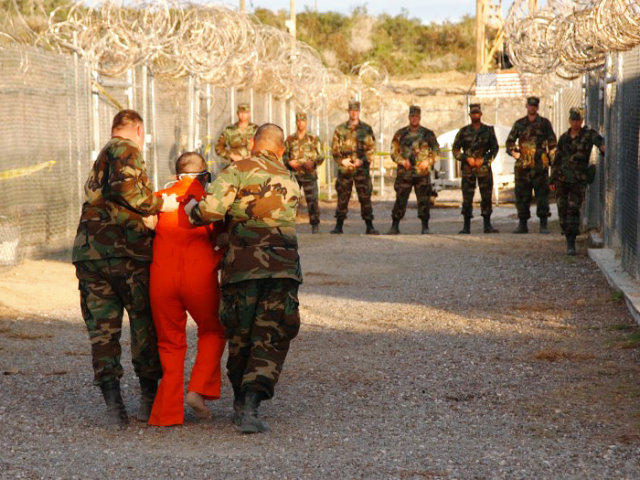
President Bush gave a speech this week in which he acknowledged the existence of secret prisons for terrorists. I happened to see most of the speech “live”. A couple of comments:

He continues to want to scare us. I don’t know how many times he used the phrase “they want to kill innocent Americans”. Apparently he thinks that the more afraid we are the more likely we are to support his policies.

It seems he has forgotten or doesn’t believe that the terrorists also want to “kill innocent Europeans”. We weren’t even mentioned. I guess we don’t count. (I have a double nationality: half of me is afraid, half of me doesn’t count.) When is he going to realize that the world is bigger than Crawford, Texas?

And he wanted to assure us that the CIA is doing great work: they are arresting terrorists, squeezing the information out of them, and using that information to save thousands of “innocent American lives”. And of course, we don't torture..........

I remember that he once told us with the same look in his eye and tone of voice that Iraq had weapons of mass destruction. We could trust the CIA and U.S. intelligence on that one, according to him.

We couldn’t then. How do we know we can now?

(Please don't misunderstand me. I'm not suggesting that Bush deliberately lied regarding Iraq. Born-again Christians don't deliberately lie ;-). But apparently the CIA, U.S. intelligence and the American government was not capable of providing us with trustworthy intellingence information. If they couldn't then, how do we know they can now?)

Thursday, September 07, 2006

The Church Blew it

One of the striking things about Dutch culture in comparison to American culture is the depth of the aversion to the church felt here. If you want to get someone really angry really quick, start talking about the church.

That’s understandable. In this small society of people the church has played a significant role through the years, and the splits have broken through family lines and cause pain even today.

An example: The Dutch Reformed Church (Liberated) was formed in 1944 as the result of a split caused by a somewhat obscure theological question which erupted into an argument over one word in the Church Order (Article 33, to be precise).

Notice the date: 1944. Think back to what was happening then. That’s right – World War II. Nazi occupation. Allied invasion. Hunger winter in Amsterdam in which people ate tulip bulbs to survive (I have people in my congregation who remember that).

And in the eastern, rural part of the country, where people had food - a church split.

The Liberated Church considered itself to be the only true church, with roots back to the Apostle Peter. In fact, when the story of God’s redeeming acts in history is taught in the schools of the church, the split of ’44 is found in the same list as Noah, the Exodus, and the return from exile of Israel. (I think there are plenty of people today who still believe that, although very few will now say it out loud.)

When we first came to Amsterdam, we were told that there was only one address for the true church in Amsterdam – and you’ve probably already guessed which one that was!

An American cannot believe the impact of church history for the society here. I will not say that there are no benefits to be found, but the overwhelming legacy is one of disillusionment, pain and anger. You would be hard pressed to find a society more plagued by depression and low self esteem than this one.

Can you understand why the language of “battle for truth” is not helpful here?
Can you understand why the proclamation that we have or know the absolute truth can be misunderstood?
Can you understand why it is hard for us to claim the high road when it comes to questions of morality and how to love one’s neighbour?

Somehow we need to learn to teach and demonstrate that the “truth” of the gospel is so much more than a proposition (to fight for or vigorously defend) - it is a person.

I didn’t get those tools in my training.

Wednesday, September 06, 2006

Another slice

When I look my congregation of approximately 150 people in a small village just outside of Amsterdam in the eyes on Sunday morning and begin my sermon with: “Dear people”, here’s what I see:

Those who have been traditional Christians all their lives but can’t really explain why
Those who don’t believe Jesus literally rose from the dead (it is idiotic to believe that!)
Those who love the organ and the Genevan Psalms
Those born Roman Catholic, who have never practiced religion and are now looking for God again
Those who don’t believe King David really existed
Those who would love a real swinging Pentecostal service – sans snake handling (that would go too far for the reserved Dutch!)
The woman whose husband left her for multiple homosexual relationships, and with whom she has to share custody of her son
The professor doctor of Assyriology, who can read Sanskrit and multiple other old languages
Those who don’t think it matters a whit whether the Bible is historically accurate or not
Single people having sex, living together, getting married, having babies
Those baptized as babies who have been re-baptized as adults
The 50 year old mentally handicapped lady who loves me
The woman who would have jumped in front of a train years ago if it wasn’t so messy, looking for a respectable way to end her (in her eyes) miserable life
The couple that evangelizes on the streets of Haarlem one afternoon a month
The man who said "I can't make heads or tails out of the atonement."
And there is probably a homosexual or two in the group, I just don’t know about it yet

I didn’t choose this congregation; she chose me.

No, that’s not even right: God put me here.

In another log, sometime, I’ll tell you more about how I cope with that.

Tuesday, September 05, 2006

Thankful Cat

Since my short interaction with Teampyro and centuriOn I’ve had quite a few more visitors to my log. In an effort to keep some of them I’d like to try to think about some of the issues that have been brought up in that log. They will be short pieces, a little bit at random, but I hope they will give you a better idea of some of the issues I am dealing with, and perhaps stimulate some constructive discussion.

I grew up a Calivinist (TULIP and all that). I remember in my Christian High School vigorously promoting the doctrine of double predestination (probably from the not-so-accurate perspective of the teenager who saw everything in black and white). Original sin and total depravity were, as they say in Dutch, “fed to us with the oatmeal spoon”.

All my studies and training did not prepare me for the question a young Dutch lady asked me a little more than 10 years ago. She was a young woman struggling to find psychological stability in her life and world. I don’t know all that had happened to her, but a lot of it was not good.

At one point in our discussions of the Gospel she asked this question:

Imagine I find a stray cat on the street, feel compassion for it and take it home. I feed it, give it a bed and a home. I provide for it and help it get better.

Do I expect the cat to be thankful? Do I demand that the cat be thankful? And if he is not thankful, do I punish him? And if he still refuses to be thankful, do I banish him from my house?


What would you do? What is your theological answer, and how would you bring it in a way that really helps this woman?

(Please remember - this is a hurting, wounded woman. Her question is serious, coming from her experience. And we want to win her heart for Christ.)